

UN Experts Visit Southern Taiwan to Examine 'Taiwan Model' for Net-Zero Transition and Biocultural Governance
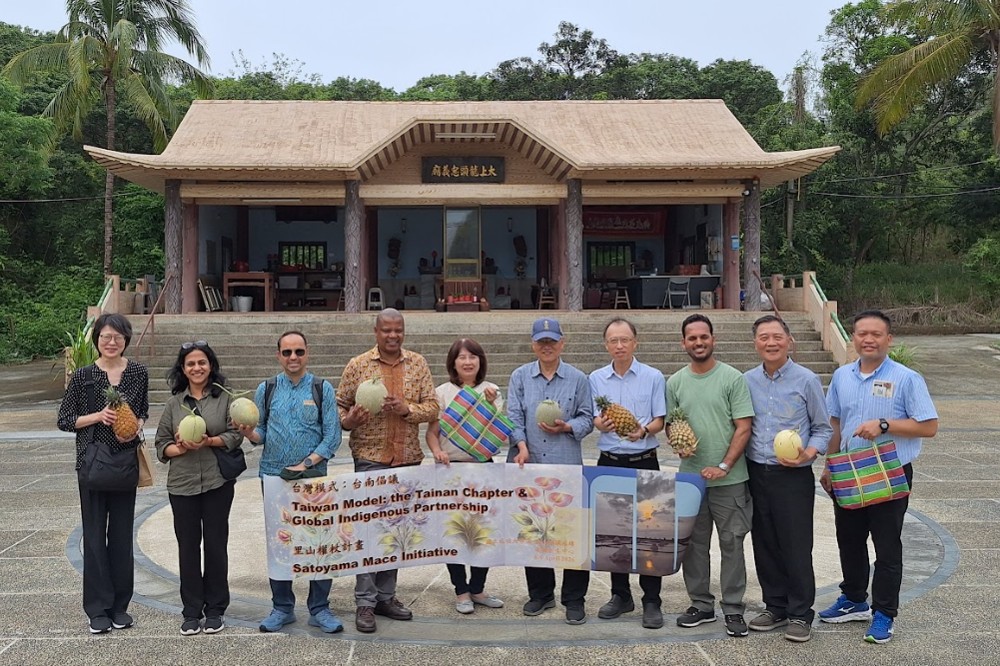
UN experts and international delegates engage with Siraya community members in Danei District, Tainan, exploring how Indigenous knowledge is integrated into carbon governance and sustainable landscape management.
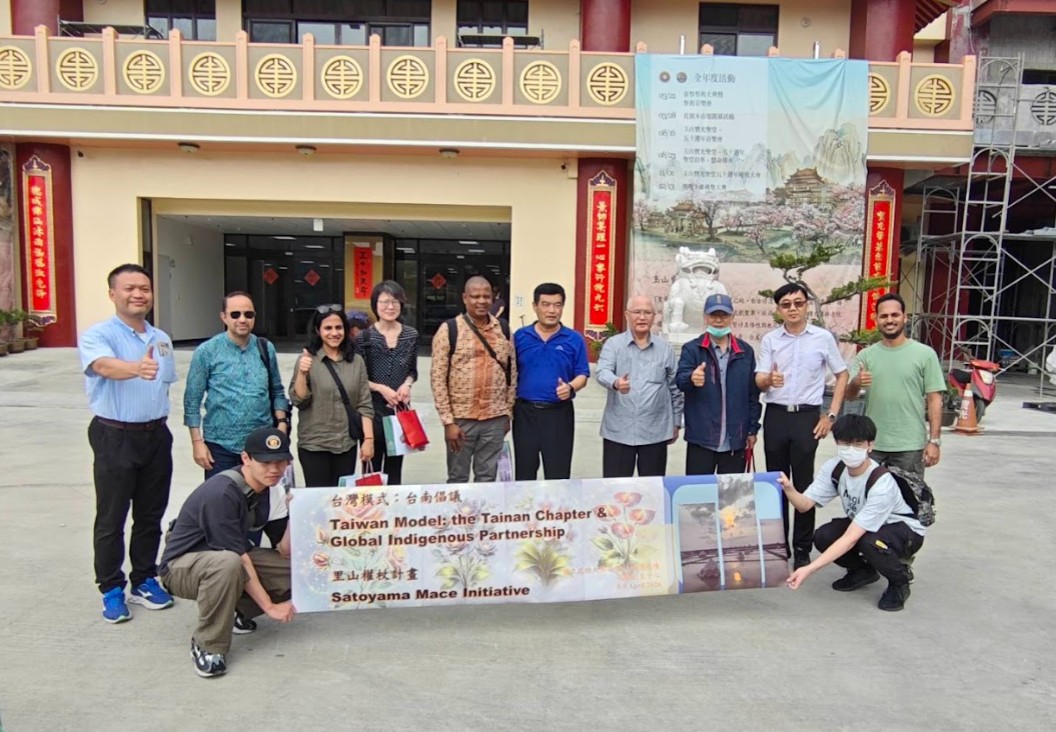
UN experts and international delegates visit Baoguang Sheng Tang in Nanhua District, Tainan, examining how faith-based practices such as vegetarianism contribute to carbon reduction and circular economy models.
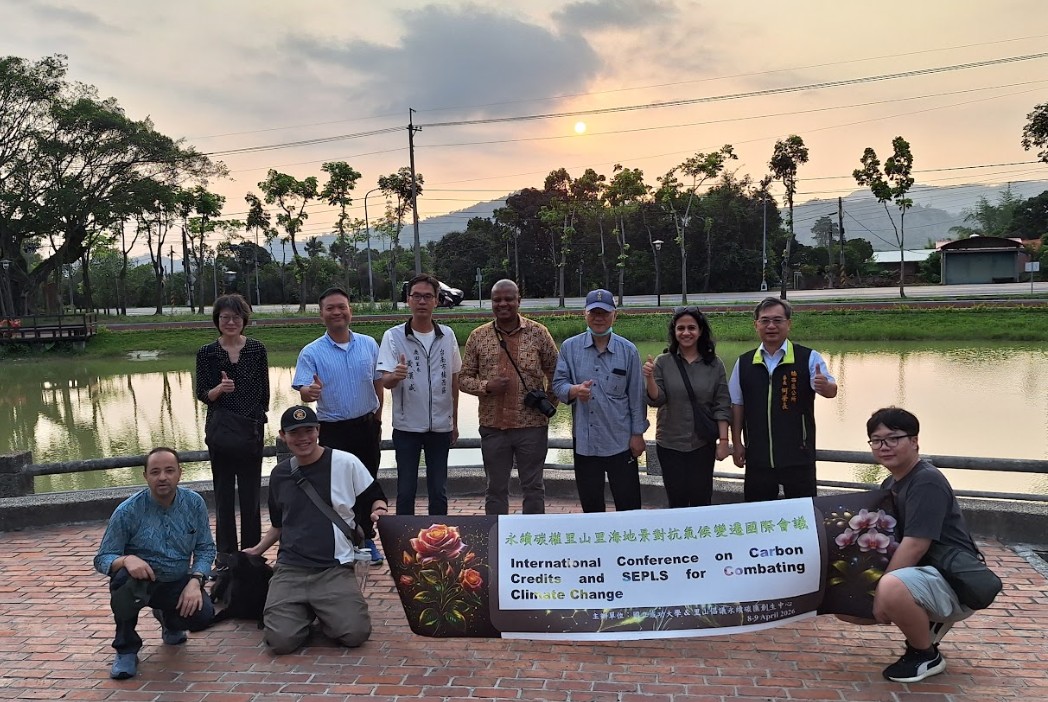
UN experts and international delegates visit Nanxi District, Tainan, exploring firefly habitats, mountain ecosystems and ecotourism practices that demonstrate vertical landscape resilience and community-based sustainability.
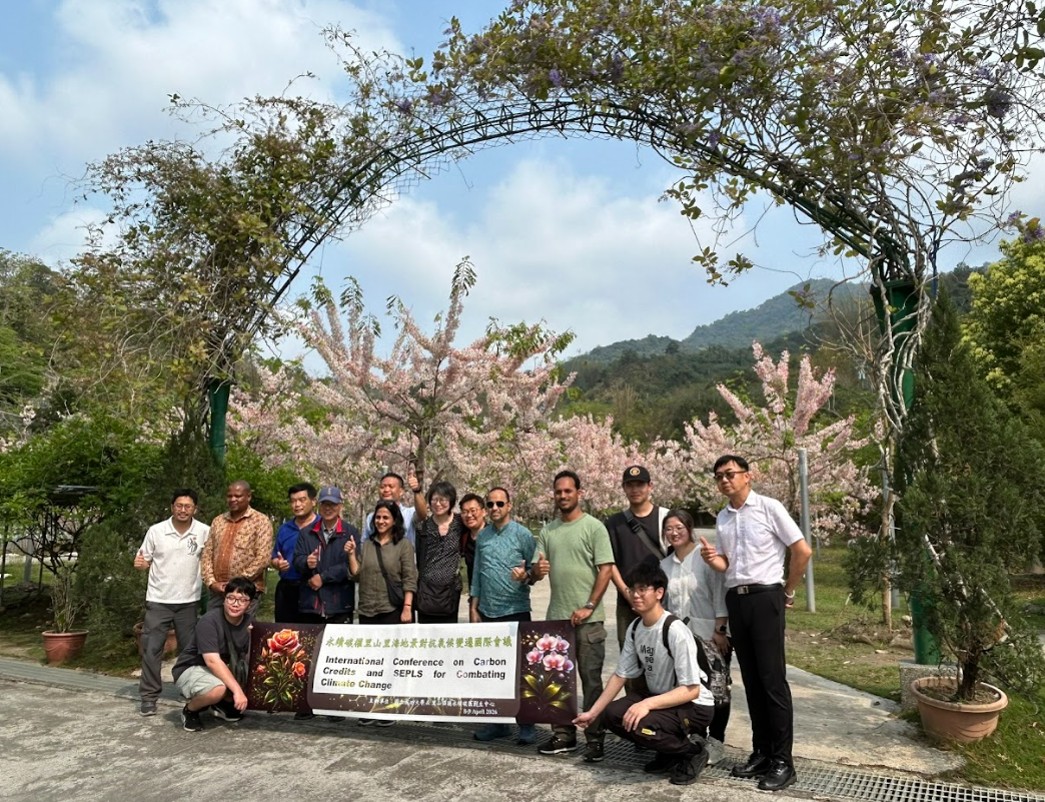
Blooming pink trumpet trees in Nanhua District, Tainan, symbolizing seasonal landscape beauty integrated with local ecological tourism and community-based environmental stewardship.
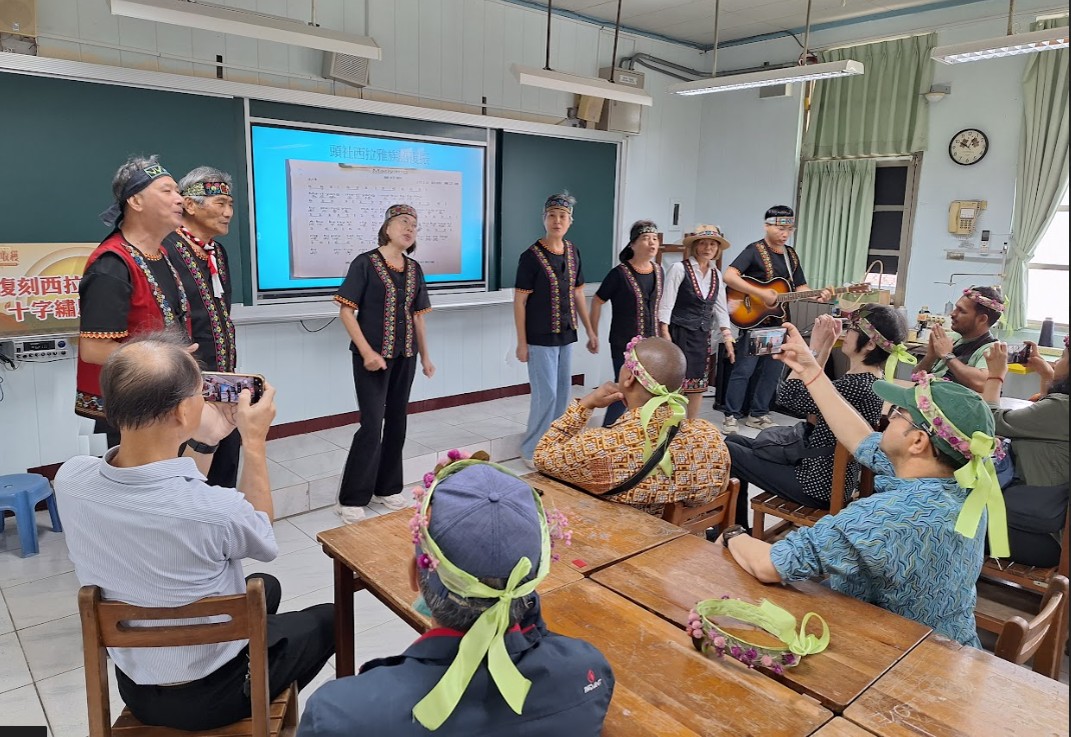
Siraya community members lead international delegates in singing traditional Siraya songs, highlighting Indigenous cultural transmission and its role in ecological knowledge and community-based sustainability in Tainan.
Experts examine scalable pathways connecting Indigenous governance, carbon finance and nature-based solutions.
TAIWAN, April 27, 2026 /EINPresswire.com/ -- On April 9, 2026, Tainan City welcomed a delegation of significant international importance. Led by Professor Yen-Hsun Su, director of the Satoyama Mace Initiative, and Yen Chen-Piao, chairman of the New Agricultural Biotechnology Production Cooperative, the group included Motsomi Maletjane, official representative of the United Nations Climate Change Commission (UNCC); Dr. Pradeep Mehta, climate and environmental action specialist at the United Nations Development Programme (UNDP); Professor Maiko Nishi of Nihon University and the United Nations University Institute for the Advanced Study of Sustainability (UNU-IAS); Academician Chiu-Chung Young of Academia Sinica; and Dr. Amit Sharma, a member of the International Union for Conservation of Nature (IUCN).
The delegation conducted an in-depth field visit across three districts in Tainan—Danei, Nanhua, and Nanxi—examining Taiwan’s innovative practices in natural carbon sinks, cultural governance, and local industrial transformation under what has been termed the “Taiwan Model” for net-zero transition.
Indigenous Knowledge and Carbon Governance in Danei
The first stop of the international delegation was Danei District, focusing on how Siraya culture is being integrated with modern ecological conservation and carbon governance. The group visited a Siraya cross-stitch workshop, where local artisan Lan Chen-Ping introduced a traditional craft passed down for centuries. They then visited the Danei and Toushe community halls, where they joined members of the Siraya community in singing traditional songs in their native language, demonstrating the central role of Traditional Ecological Knowledge (TEK) in contemporary sustainability governance. Local representatives, including mediation committee chair Lin Tsung-Hui and village chief Lo Wen-Tsung, participated in the guided visit.
District Chief Chen Chun-Ta emphasized that Siraya culture is not only a valuable cultural asset but also a critical foundation for advancing social justice and Indigenous rights within the Taiwan Model. Through the Satoyama Mace Initiative, Danei is transforming landscape stewardship into high-integrity carbon credit systems that generate “biocultural dividends.”
The international delegation expressed strong recognition of the local implementation of the principle of Free, Prior and Informed Consent (FPIC). They noted that Taiwan’s net-zero transition goes beyond emission reduction, emphasizing benefit-sharing with local communities and embodying a genuine “just transition.” The Danei experience successfully translates “landscape stewardship” into “reciprocal agreements,” offering a new model for global sustainable development. Tainan Mayor’s spouse Liu Yu-Ching and Deputy Director of the Agriculture Bureau Wu Wei-Ta also presented locally produced fruits to promote Tainan’s agricultural specialties.
The first stop in Danei District focused on how Siraya Indigenous culture is being integrated into modern ecological conservation and carbon governance systems. The delegation visited a traditional Siraya cross-stitch workshop, where local artisan Lan Chen-Ping demonstrated a centuries-old craft. At the Danei and Toushe community centers, the group joined local Siraya residents in singing traditional songs in their native language, illustrating the role of Traditional Ecological Knowledge (TEK) in contemporary sustainability practices. Local officials emphasized that Siraya culture represents not only a valuable heritage but also a cornerstone of social justice and Indigenous rights within Taiwan’s net-zero strategy. Through the Satoyama Mace Initiative, Danei is transforming landscape stewardship into high-integrity carbon credit systems that generate what organizers call “biocultural dividends.” Delegates expressed strong support for Taiwan’s implementation of the principle of Free, Prior, and Informed Consent (FPIC), noting that the model goes beyond emissions reduction to ensure that benefits are equitably shared with local communities—an example of a “just transition” in practice.
Faith-Based Sustainability and Circular Economy in Nanhua
The delegation then traveled to Nanhua District to further examine how the Taiwan Model is applied across different social contexts. One of the key sites was Baoguang Sheng Tang, located in Yushan Village. Dr. Wang Chang-Ching noted that the temple, built along the mountain terrain, is one of the largest Yiguandao Baoguang-affiliated temples in southern Taiwan. Baoguang Sheng Tang has long promoted vegetarianism, implementing carbon reduction through plant-based diets and demonstrating a deep integration of religious belief and environmental sustainability. This made it a highlight of the international visit.
District Chief Yen Chen-Yu introduced Taiwan’s plum powder industry, explaining how it integrates local cultural practices with natural resource management. The industry not only enhances environmental sustainability but also increases carbon sequestration capacity, creating a distinctive model for local revitalization. The delegation also visited the Nanhua Sugar Factory to understand the practical operation of industrial transformation and circular economy strategies. District Chief Hsu Chuan-Li emphasized that Nanhua is actively advancing industrial upgrading and resource integration to respond to global net-zero trends.
In Nanhua District, the delegation explored how the Taiwan Model is applied across diverse social contexts. A key site was Baoguang Sheng Tang, one of the largest Yiguandao temples in southern Taiwan. According to Dr. Wang Chang-Ching, the temple promotes vegetarianism as part of its religious practice, contributing to carbon reduction through plant-based diets. The site exemplifies how spiritual traditions can align with environmental sustainability. District officials also introduced Taiwan’s plum powder industry, demonstrating how local agricultural products can integrate cultural heritage with sustainable resource management. The delegation visited the Nanhua Sugar Factory to observe industrial transformation and circular economy practices. Officials noted that Nanhua is actively pursuing industrial upgrading and resource integration to align with global net-zero trends.
Ecotourism and Vertical Landscape Resilience in Nanxi
The final stop of the visit was Nanxi District, focusing on the integration of natural resources and industrial development. The delegation visited the historic Jiang family residence, which has a history of over 200 years and stands as a testament to the evolution of rural culture while serving as an important site for cultural preservation. Nanxi has developed a resilience-oriented blueprint based on the concept of a “vertical wetland,” integrating mountain ecosystems, biodiversity, and local industries. The delegation toured the Meiling Wulong Trail to observe firefly habitats and experienced Guizi Hot Springs as well as the local plum-based culinary industry.
District Chief Ho Jung-Chang stated that Nanxi is not only a popular tourist destination but also a core site for implementing the concept of Socio-Ecological Production Landscapes and Seascapes (SEPLS). Through visitor management and ecological conservation mechanisms, Nanxi has successfully transformed firefly habitat protection into a viable economic model. By integrating Traditional Ecological Knowledge with modern governance systems, the district has established a high-integrity framework linking carbon and ecological value. This model translates abstract climate policies into tangible seasonal experiences and further connects with international voluntary carbon market frameworks. According to the Nanxi District Office, behind the beauty of glowing fireflies lies a community-based sustainable economic system. By embedding “biocultural dividends” into local branding, Nanxi represents Taiwan’s effort to showcase vertical ecological resilience—from coastal areas to mountainous landscapes—to the global community.
The final leg of the visit took place in Nanxi District, where natural resource management and rural industry development converge. The delegation visited the historic Jiang family residence, a more than 200-year-old site that reflects the region’s agricultural heritage. Nanxi has developed a “vertical wetland” resilience model that connects mountain ecosystems, biodiversity conservation, and local industries. The group toured the Meiling Wulong Trail to observe firefly habitats and experienced Guizi Hot Springs and the region’s plum-based culinary sector. Local officials explained how firefly conservation—supported by visitor management systems and ecological protection measures—has been transformed into a sustainable economic model. By integrating traditional ecological knowledge with modern governance, Nanxi has created a high-integrity system linking carbon and ecological values.
This approach translates abstract climate policies into tangible, seasonal experiences while connecting to international voluntary carbon market frameworks. Officials said that behind the scenic glow of fireflies lies a community-driven sustainability system. The model, which embeds “biocultural dividends” into local branding, represents Taiwan’s effort to showcase a vertically integrated ecological resilience strategy—from coastal zones to mountain landscapes—on the global stage.
About the Satoyama Mace Initiative
The Satoyama Mace Initiative is a Taiwan-based international platform that advances integrated approaches to climate action by linking biodiversity conservation, carbon markets, and community-based governance. Rooted in the concept of socio-ecological production landscapes and seascapes (SEPLS), the initiative promotes high-integrity carbon systems that incorporate cultural values, Indigenous knowledge, and measurable climate outcomes. It aims to transform landscape stewardship into scalable mechanisms for both mitigation and adaptation, while ensuring equitable benefit-sharing through frameworks such as biocultural dividends.
About the Global Indigenous Partnership for Climate Action
The Global Indigenous Partnership for Climate Action is an international collaboration platform designed to empower Indigenous peoples and local communities in climate governance and carbon market participation. The partnership focuses on strengthening capacities in measurement, reporting, and verification (MRV), supporting Free, Prior, and Informed Consent (FPIC), and facilitating access to global climate finance mechanisms. By integrating Traditional Ecological Knowledge (TEK) with scientific methodologies, the platform seeks to position Indigenous-led solutions at the center of global climate strategies.
About the Tainan Chapter
The Tainan Chapter represents a localized implementation of the Taiwan Model, bringing together government agencies, academic institutions, community organizations, and industry partners to operationalize net-zero transition strategies. It serves as a regional demonstration hub for integrating natural carbon sinks, cultural heritage, and sustainable industries. Through pilot projects across diverse landscapes—from coastal wetlands to mountainous ecosystems—the Tainan Chapter showcases how place-based governance and community participation can deliver measurable climate, ecological, and socio-economic benefits.
Shu-Mei Wang
SEPLS Carbon Credit Regional Revitalization Center
email us here
Visit us on social media:
LinkedIn
Other
Legal Disclaimer:
EIN Presswire provides this news content "as is" without warranty of any kind. We do not accept any responsibility or liability for the accuracy, content, images, videos, licenses, completeness, legality, or reliability of the information contained in this article. If you have any complaints or copyright issues related to this article, kindly contact the author above.
